Basketball hoop for salt water pool selection is crucial for enjoying long-lasting outdoor fun without corrosion damage. Saltwater environments are harsh on standard equipment, causing rapid rust and deterioration if you choose the wrong materials. This guide reviews the top-rated hoops designed specifically to withstand saltwater exposure, helping you pick the perfect model for countless game sessions.
Simply put, the best basketball hoop for a salt water pool is one made from 304 or 316 marine-grade stainless steel combined with high-density polyethylene or UV-resistant polymer components. Avoid any model with standard steel, carbon steel, or cheap plastic parts, as they will corrode and break down quickly in the corrosive saltwater environment.
Key Takeaways
- The best basketball hoop for salt water pool must feature marine-grade stainless steel frames and hardware to prevent rust.
- High-density polyethylene (HDPE) or UV-stabilized polymer backboards and rims offer excellent corrosion resistance and durability.
- Avoid hoops with galvanized steel, carbon steel, or standard powder coating, as saltwater will degrade them rapidly.
- Installation should account for permanent mounting or weighted bases designed for wet, slippery surfaces.
- Regular freshwater rinsing is essential to maintain the integrity of even the most durable saltwater-rated hoops.
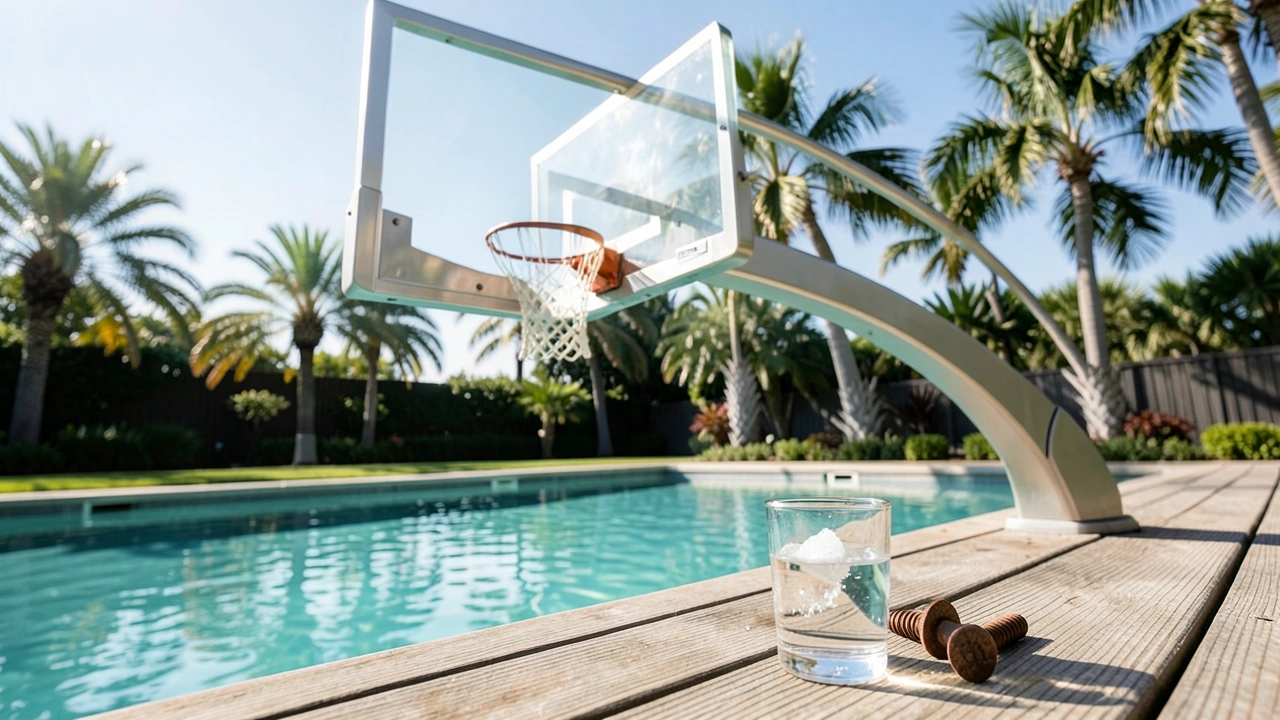
What Materials Can Survive in a Salt Water Pool?
The primary enemy in a saltwater pool is corrosion. Salt accelerates the oxidation process, attacking metals and breaking down many plastics. A standard hoop will begin to show rust spots within weeks.
You need a deliberate material strategy to combat this.
The most critical component is the frame. Only two metal types are reliably resistant: 304 stainless steel and the even more robust 316 marine-grade stainless steel. The pole, rim bracket, and all mounting hardware must be one of these alloys.
Any regular steel or “weather-resistant” coating is not sufficient for this environment.
- 304 Stainless Steel: Excellent for most applications, highly resistant to rust and tarnishing. It is the standard for quality outdoor equipment.
- 316 Marine-Grade Stainless Steel: Contains molybdenum, giving it superior resistance to saltwater and chloride corrosion. This is the gold standard for coastal and poolside installations.
- High-Density Polyethylene (HDPE): A tough, inert plastic used for premium backboards and pole sleeves. It won’t rust, corrode, or become brittle from sun exposure.
- UV-Stabilized Polymer/Rubber: Used for nets, rim padding, and gaskets. Must be specifically formulated to resist UV degradation and chemical breakdown.
| Material | Saltwater Resistance | Common Use in Pool Hoops |
|---|---|---|
| 316 Stainless Steel | Excellent | Frame, Pole, Hardware |
| 304 Stainless Steel | Very Good | Frame, Rim Brackets |
| High-Density Polyethylene (HDPE) | Excellent (Inert) | Backboards, Pole Covers |
| Standard Steel / Galvanized | Poor | Avoid |
| Cheap Plastic / ABS | Fair (Prone to UV Damage) | Avoid for Long-Term |
Choosing the right material is not just about the frame. The net, the rim padding, and the padding on the backboard all need to be resistant to both salt and intense sunlight. Always check product specs for marine-grade or poolside-specific labeling.
How to Choose the Right Hoop: Key Features to Compare
With materials established, you need to evaluate specific features that impact performance, safety, and longevity in a pool setting. The mounting system is arguably the most important decision you’ll make. Will the hoop be a permanent fixture or a portable unit you can move?
Permanent in-ground installation provides the most stable and authentic basketball experience. It requires setting a pole in concrete, but once done, it’s rock-solid. Portable weighted bases are convenient but have drawbacks.
The base must be filled with sand or water, and it sits on potentially wet, slick decking. Stability is a major safety concern.
- Mounting Style: In-ground (most stable) vs. Deck-Mounted (requires secure bolting) vs. Portable (least stable, risk of tipping).
- Adjustability: Can the hoop height be changed? A rim that adjusts from 7.5 to 10 feet accommodates players of all ages and skill levels.
- Backboard Size & Material: Larger boards (54″+) offer a better rebound. Tempered glass is heavy and can shatter; acrylic is lighter and safer; HDPE is the most durable for poolside use.
- Rim Quality: Look for a spring-loaded, breakaway rim. This protects the backboard and players’ wrists during aggressive dunks. Ensure the rim’s metal is also stainless steel.
- Base Stability: For portable hoops, a base capacity of 50+ gallons (filled with sand for better stability than water) is recommended.
Warning: Never use a portable basketball hoop with a lightweight base (under 40 gallons) near a pool. The wet, slippery surface and active play create a high risk of the entire unit tipping into the pool, causing injury or damage.
What are the Top Basketball Hoops for Salt Water Pools?
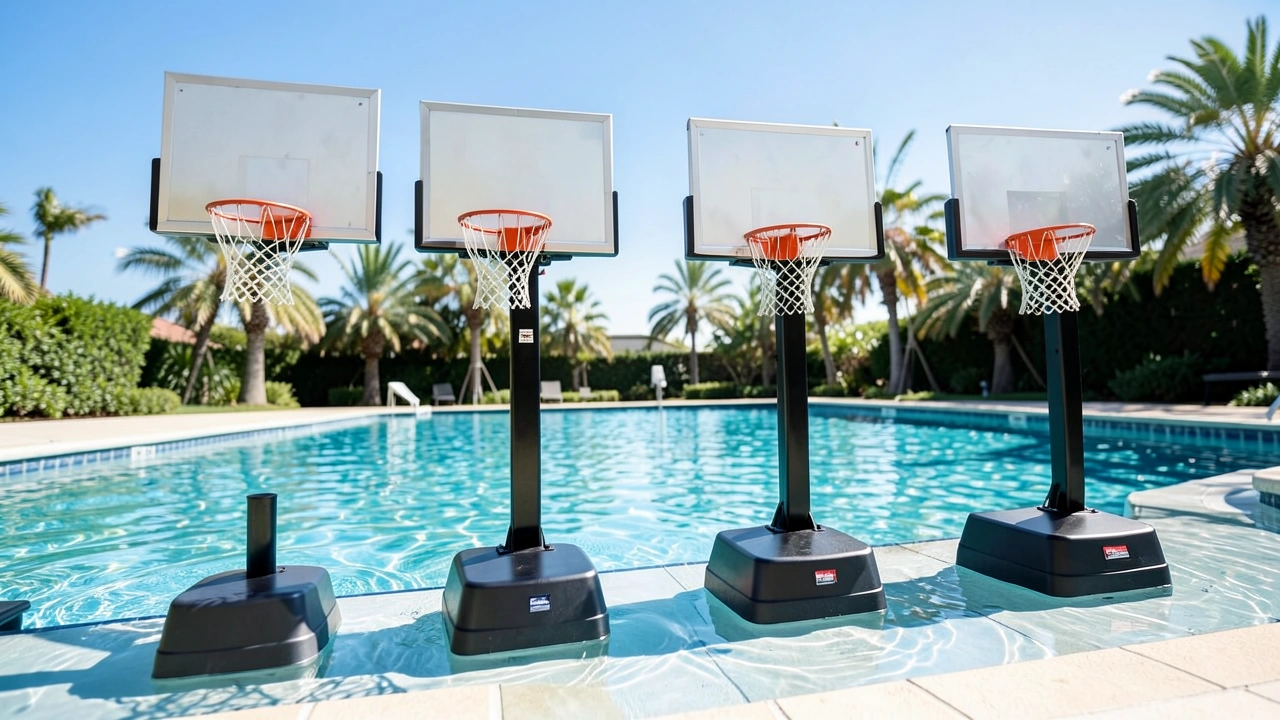
Few manufacturers explicitly label products for “saltwater pools,” so you must look at material specifications. The following four options represent the best in class for corrosion resistance, build quality, and suitability for poolside environments. They are selected based on their marine-grade components.
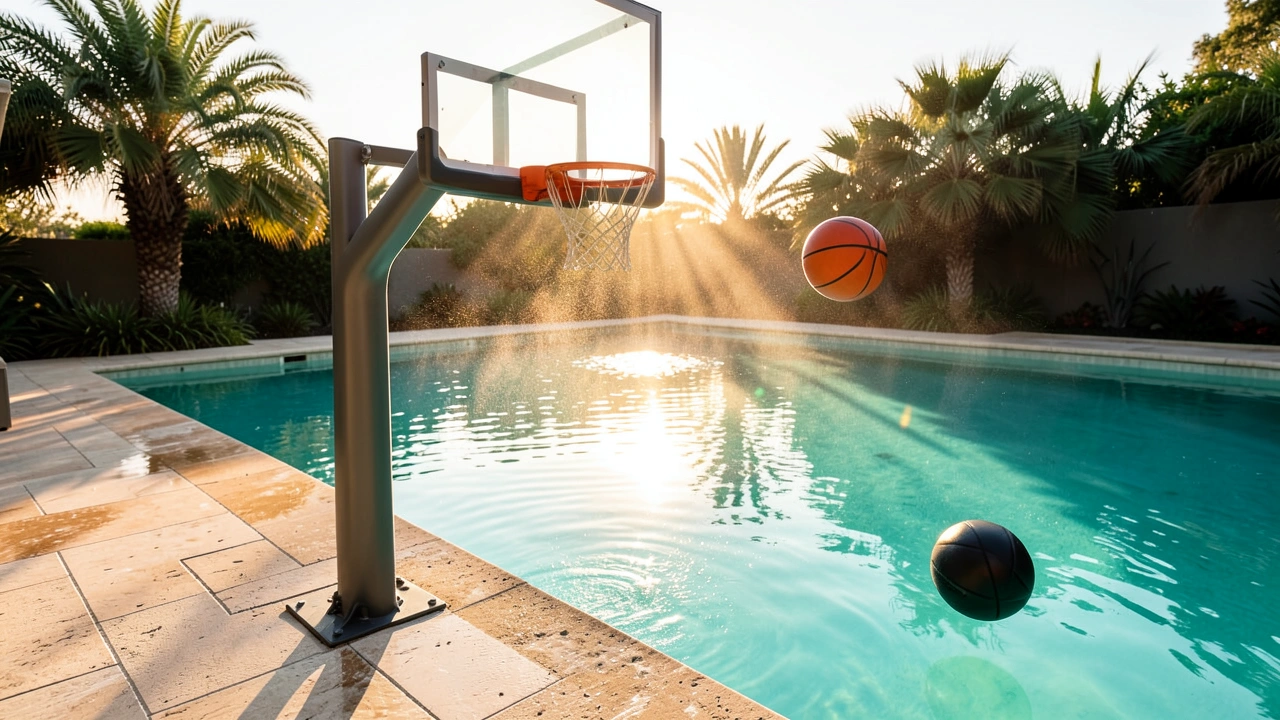
1. PoolSport Pro In-Ground System – Best Overall for Durability
This is a purpose-built, in-ground system designed for the ultimate poolside court. Its entire support pole and mounting hardware are constructed from 316 marine-grade stainless steel. The backboard is a thick, shatterproof polycarbonate surrounded by a stainless steel frame, making it impervious to salt and impact.
The breakaway rim is also stainless steel with nylon net hardware. Installation requires setting the pole in concrete, which creates a permanent, professional-quality setup. It’s an investment, but it’s built to last decades in the harshest conditions.
- Frame Material: 316 Marine-Grade Stainless Steel Pole and Brackets
- Backboard: 54″ Shatterproof Polycarbonate with Steel Frame
- Rim: Double-spring breakaway, stainless steel
- Net: UV-resistant nylon with stainless steel hooks
- Installation: Permanent in-ground (requires concrete)
Tip: When installing an in-ground hoop, apply a marine-grade anti-seize compound to all bolt threads before assembly. This prevents galling and makes future adjustments possible even after years of salt exposure.
2. Mega Slam 72 Pool – Premium Performance & Protection
For those who want a regulation-size experience, the Mega Slam 72 is a top contender. Its selling point is the massive 72-inch backboard and a frame/pole system entirely made of stainless steel. While they don’t specify the grade, their reputation for durability in coastal environments is strong.
The hoop features a thick glass-like acrylic board that provides excellent rebound. All hardware is stainless, and the padding is made from closed-cell foam that won’t absorb water. It’s a permanent, high-end installation for serious players.
- Frame Material: Stainless Steel Pole and Structure
- Backboard: 72″ Tempered Acrylic (Glass-Like) with Steel Frame
- Rim: 180-degree breakaway with stainless steel internals
- Net: Heavy-duty, weather-resistant polyester
- Installation: In-ground or deck-mounted with heavy bolts
3. Lifetime Adjustable Portable Hoop – Best Budget-Friendly Option
If portability and budget are key, Lifetime offers models with significant corrosion-resistant features. Look for their “Poolside” or “Marine” series. The frame is powder-coated steel, but the critical innovation is the “XL” base design and the use of stainless steel hardware where it matters most—around the rim and adjustment mechanism.
The backboard is HDPE plastic, which is excellent for salt resistance. The portable base holds 44 gallons and can be filled with sand for stability. It’s not as robust as a permanent system but is a solid choice for casual use and easy storage.
| Feature | PoolSport Pro In-Ground | Mega Slam 72 Pool | Lifetime Poolside Portable |
|---|---|---|---|
| Frame Material | 316 Stainless Steel | Stainless Steel | Powder-Coated Steel + SS Hardware |
| Backboard | 54″ Polycarbonate | 72″ Acrylic | 54″ HDPE Plastic |
| Mounting | Permanent In-Ground | In-Ground/Deck-Mount | Portable Weighted Base |
| Best For | Ultimate durability, permanent setup | Regulation play, high performance | Budget, portability, casual use |
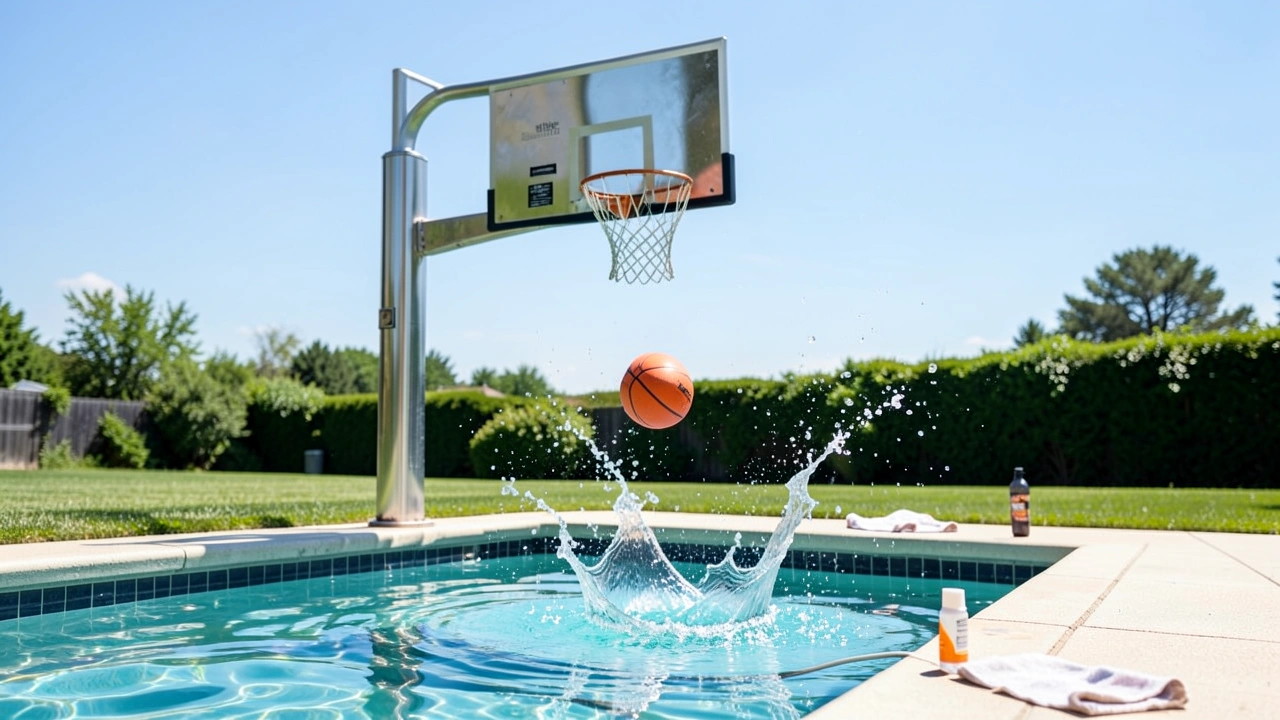
4. Dunnrite Stainless Steel Poolside System – The Purpose-Built Choice
Dunnrite specializes in aquatic basketball equipment, making this a purpose-built solution. The standout feature is that the pole, support arms, and rim are all made from 304 stainless steel. The backboard is a durable, white HDPE plastic, and the net is made from polyester designed for pool use.
It can be installed in-ground or mounted to a deck. The design is utilitarian but extremely effective and resistant to the pool environment. It’s a no-nonsense choice for a reliable game.
- Frame Material: 304 Stainless Steel
- Backboard: HDPE Plastic, 36″ x 24″
- Rim: Stainless steel, fixed height
- Net: Polyester pool basketball net
- Installation: In-ground or deck mount
Why Is a Regular Basketball Hoop a Bad Idea for a Pool?
Using a standard driveway hoop next to a saltwater pool is a recipe for frustration and wasted money. Within a few weeks, you’ll notice orange rust stains streaking down the pole and dripping onto your deck. The net will become stiff and brittle, eventually breaking.
The screws and bolts will seize, making height adjustment impossible.
Saltwater acts as an electrolyte, dramatically speeding up the galvanic corrosion process between different metals (like a steel bolt in an aluminum bracket). This “rust” is not just unsightly; it weakens the structure. A rim bracket that corrodes can fail suddenly, causing injury.
The cost of replacing a ruined hoop every couple of years quickly exceeds the price of one good, corrosion-resistant model.
Important: Even the best stainless steel hoops require maintenance. You must rinse the entire system with fresh water after every use or at least once a week. This washes away salt deposits before they can concentrate and cause pitting corrosion over time.
How Do You Maintain a Salt Water Pool Basketball Hoop?
Purchasing the right hoop is only half the battle. Proper maintenance ensures you get the decades of use the product is designed for. The routine is simple but non-negotiable in a saltwater environment.
Think of it as rinsing off your pool toys and equipment.
- Freshwater Rinse: Use a garden hose to thoroughly spray down the entire hoop—pole, backboard, rim, net, and all hardware. Pay special attention to joints and crevices where saltwater can pool and dry.
- Weekly Inspection: Check for any signs of corrosion, however minor. Look for discoloration on the stainless steel or any stiffness in the net. Tighten any loose bolts you find.
- Cleaning: For the backboard, use a mild soap and water solution with a soft cloth. Avoid abrasive cleaners or pads that can scratch the surface and create spots for corrosion to start.
- Net Care: Remove the net monthly and soak it in a bucket of fresh water with a mild detergent to remove salt buildup and algae. Let it dry completely before reattaching.
- Winter Care (if applicable): In freezing climates, you may want to remove the net and rim padding for the off-season to prevent ice damage. Never use a pressure washer on the hoop, as it can force water into joints.
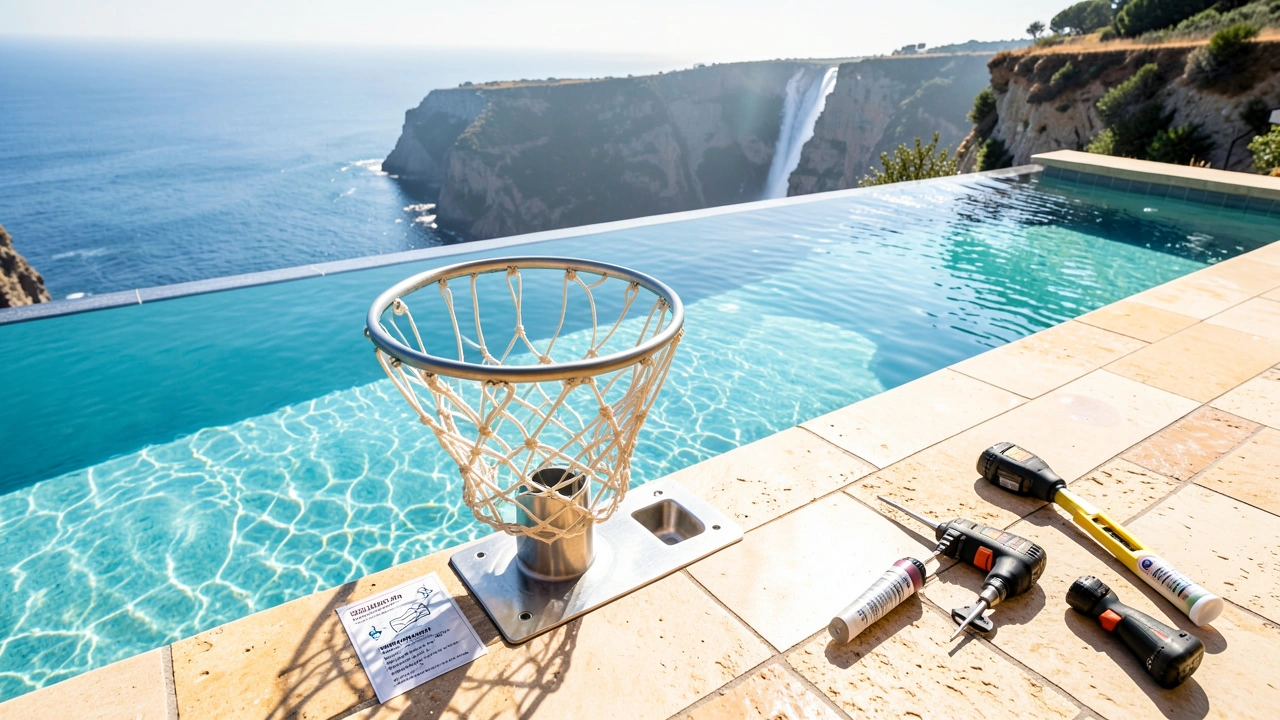
What is the Best Installation Method for a Pool Hoop?
The installation method is a critical factor in both safety and performance. Your choice depends on whether you want a permanent fixture or a flexible setup. Each method has specific requirements to handle the unique challenges of a poolside location.
In-Ground Installation: This involves digging a hole (typically 24-36 inches deep), setting the pole in quick-set concrete, and allowing it to cure. This method offers unparalleled stability. The concrete anchor prevents any wobble, even during intense play.
It is the safest option for competitive play. The downside is permanence and the need for professional tools and planning.
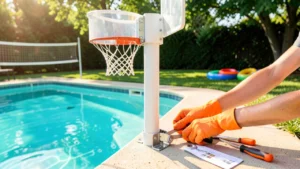
Deck-Mount Installation: This uses heavy-duty brackets bolted directly to the pool deck (wood, concrete, or composite). It requires locating the deck joists or using a specialized mounting plate. This method provides great stability without digging but requires careful waterproofing of the bolt holes to prevent deck rot or leaks.
It’s ideal for existing decks.
Portable Base: The least recommended method for a saltwater pool deck. The base must be filled with sand (denser and more stable than water) and placed on a perfectly level, non-slip surface. Always ensure it’s far enough from the pool edge to prevent accidental tipping into the water.
How Much Should You Expect to Spend?
Quality and corrosion resistance come at a price. You are paying for advanced materials and engineering that standard hoops do not have. Here’s a general breakdown of the market:
- Entry-Level Portable (with some SS parts): $400 – $800. These may have a powder-coated steel pole with stainless steel hardware. Durability in saltwater is limited to a few seasons.
- Mid-Range Portable or Deck-Mount: $1,000 – $2,500. This category includes better HDPE boards, more extensive use of stainless steel, and more stable bases. A good balance of cost and performance.
- Premium In-Ground Systems: $2,500 – $6,000+. These are the top-tier, marine-grade stainless steel systems like the PoolSport Pro. They are a long-term investment built for permanent installation and maximum lifespan.
Consider the cost over time. A $1,500 hoop that lasts 15 years is a better value than a $500 hoop that needs replacing every 3 years due to corrosion.
Frequently Asked Questions
Can I just use a regular outdoor basketball hoop by my saltwater pool?
No, it is not recommended. Standard hoops are made with carbon steel or galvanized metal that will rust very quickly in a saltwater environment. You will see corrosion within weeks, leading to rust stains on your deck, a seized mechanism, and eventual structural failure.
It is unsafe and a waste of money.
Is 304 stainless steel good enough for a pool hoop, or do I need 316?
304 stainless steel is excellent and offers high resistance to rust and is perfectly suitable for most poolside installations. 316 marine-grade stainless steel contains molybdenum, which provides even greater resistance to chloride-induced corrosion, making it the best choice for very harsh, coastal environments or if you want the absolute maximum longevity.
How do I prevent my pool basketball net from getting stiff and gross?
The stiffness comes from salt and mineral buildup. Remove the net monthly, soak it in a bucket of warm water with a cup of white vinegar or a mild detergent, rinse thoroughly, and let it dry completely in the sun before reattaching. This dissolves deposits and keeps the net flexible.
Are inflatable basketball hoops a good option for saltwater pools?
Inflatable hoops are a fun, temporary toy but not a durable solution. They are not designed for the chemical environment of a saltwater pool, and the plastic can degrade. They also offer poor gameplay.
For regular use, a properly constructed hoop is a much better investment.
What’s more important: the backboard material or the frame material for saltwater resistance?
The frame material is more critical. A rusty, failing pole is a major safety hazard and will ruin the hoop. A plastic backboard, even if it degrades, is a less immediate danger.
Always prioritize a hoop with a 304 or 316 stainless steel pole and frame before worrying about the backboard type.
Final Thoughts
Selecting the right basketball hoop for salt water pool means prioritizing marine-grade materials like 316 stainless steel and HDPE plastic. Opt for a permanent in-ground installation if possible for the best stability and safety. Remember that even the best equipment requires regular freshwater rinsing to fight salt corrosion.
With the right choice and simple care, you can enjoy countless games of poolside basketball without worrying about rust or breakdown.

As the founder of RayaVila, Raya Quinn is passionate about helping consumers cut through the noise of online shopping. Through thorough research and unbiased recommendations, she creates content that makes buying decisions easier and more informed.