
Pool basketball is the common name for a fun water sport, but it’s also known by several other terms depending on the context and region. This guide explains all the names, the basic rules, the equipment you need, and how to get started. You’ll learn the difference between casual backyard play and organized league games.
Whether you call it pool basketball, water basketball, or aqua basketball, the core idea remains the same. Players shoot a ball into hoops set up in or around a swimming pool. It’s a fantastic way to stay active during the summer and enjoy time with friends and family.
Simply put, pool basketball is most commonly called water basketball or aqua basketball. It’s a recreational game played in swimming pools with floating hoops, designed for fun and light exercise in the water.
Key Takeaways
- The primary name is pool basketball, but water basketball and aqua basketball are widely recognized and used interchangeably.
- Equipment typically includes a water-resistant ball and portable, weighted hoop systems that attach to the pool deck.
- The game has simplified rules compared to traditional basketball, focusing on fun, safety, and casual play in a aquatic environment.
- It’s an excellent full-body workout that builds cardiovascular health and muscle strength with low joint impact.
- You can play many variations, from 1-on-1 games to full team matches, making it adaptable for any group size.
What Is Pool Basketball and Why Is It Popular?
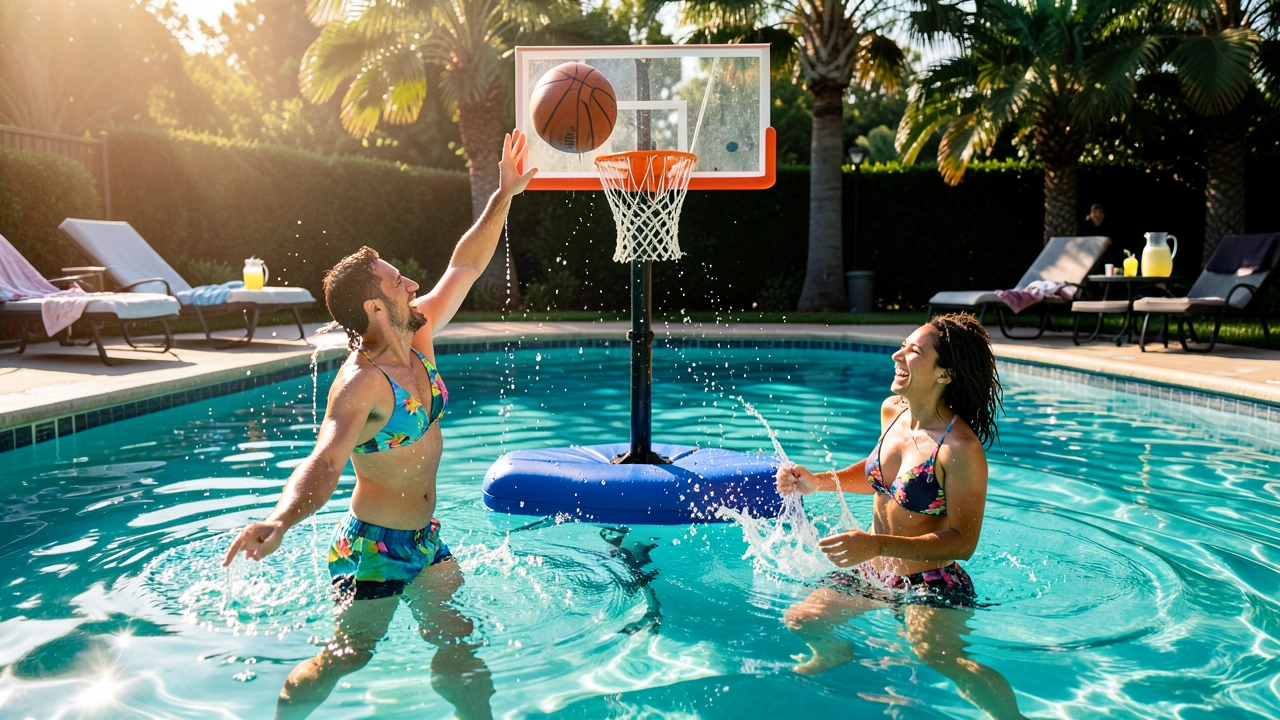
At its core, pool basketball is a variant of basketball adapted for play in a swimming pool. The fundamental objective mirrors the traditional sport: score points by shooting a ball through a hoop. However, the water changes everything about movement, strategy, and physical demand.
The popularity of this water game stems from several key factors. It combines physical activity with the cooling relief of water, making it ideal for hot climates and summer parties. It requires minimal space and setup, especially with modern portable equipment.
Most importantly, it’s an inclusive activity that people of various ages and athletic abilities can enjoy together.
- Social Appeal: It’s a guaranteed crowd-pleaser for pool parties, family gatherings, and community events.
- Low-Impact Exercise: The water supports body weight, reducing stress on knees and joints while still providing resistance.
- Versatility: Can be played as a serious competitive sport or a relaxed, casual game.
- Easy Setup: Modern pool hoops are designed for quick, tool-free installation and removal.
- Improves Coordination: Playing in water challenges balance, core stability, and hand-eye coordination in new ways.
What Are the Different Names for Pool Basketball?
While “pool basketball” is the most straightforward and common term, you will encounter several other names. These alternate titles often depend on the specific sport’s governing body or the style of play. Understanding these terms helps you find rules, equipment, and communities more easily.
The most prevalent synonym is water basketball, which is frequently used in international and competitive contexts. Another common term is aqua basketball, which emphasizes the aquatic environment. Some brands or event organizers might use proprietary names, but they all describe the same fundamental activity.
| Common Name | Context / Usage |
|---|---|
| Pool Basketball | General recreational play, backyard setups, casual conversation. |
| Water Basketball | Formal leagues, international competitions, and organized sports federations. |
| Aqua Basketball | Often used in product descriptions, fitness classes, and therapeutic programs. |
| Splashball | A branded term sometimes used for youth-oriented programs or specific product lines. |
In summary, the terminology largely overlaps. When searching for rules or equipment, using any of these terms will yield relevant results. The choice of name often reflects the setting, from casual to competitive.
How Does Pool Basketball Equipment Work?
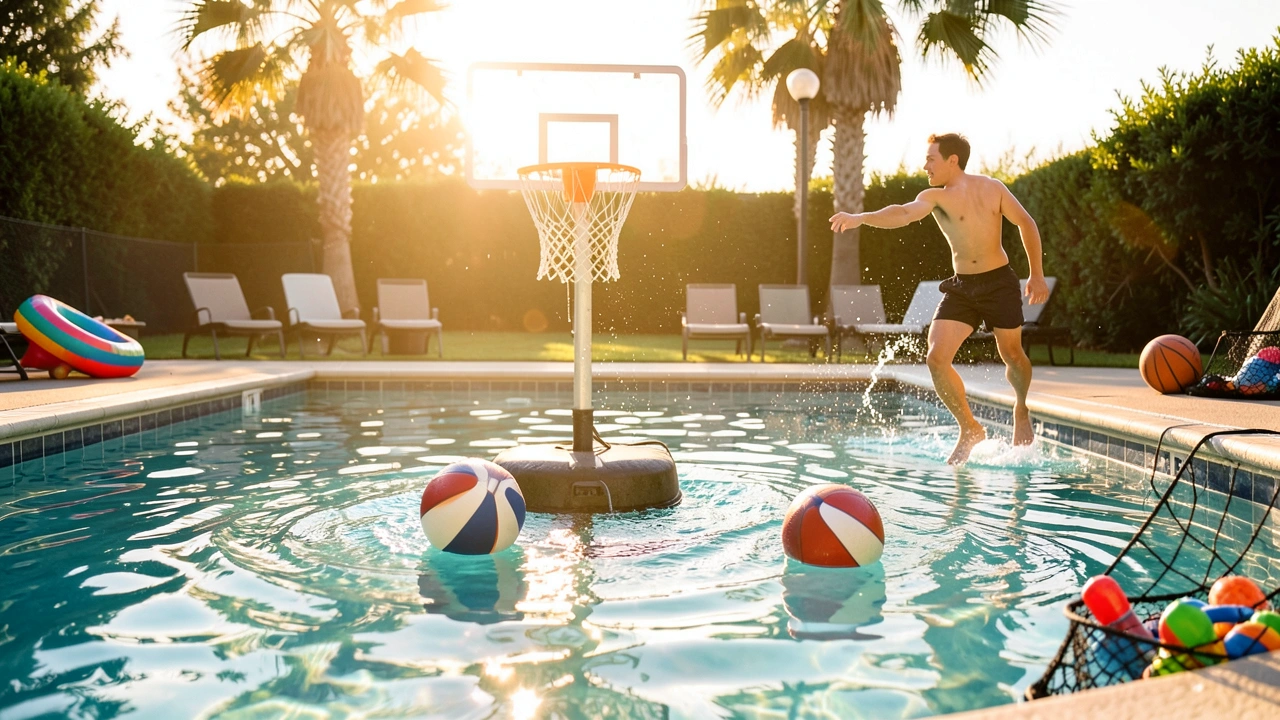
The equipment for pool basketball is specifically engineered for the aquatic environment. A standard basketball and hoop would not work due to water damage, corrosion, and instability. Pool-specific gear addresses these challenges through material science and smart design.
The ball is typically made from durable, waterproof materials like vinyl or rubber composites. It is lighter than a regulation basketball to allow for easier handling in the water. The hoops are the most specialized component, designed to attach securely to the pool deck without permanent installation.
- The Ball: A water-resistant, brightly colored ball that floats or is easily retrievable. Sizes range from youth to adult.
- The Hoop: A rim with a net (often nylon) attached to a heavy base or a clamp system. The base is filled with sand or water for stability.
- The Backboard: Usually made from shatterproof, UV-resistant plastic. It provides a target but doesn’t need to be glass or wood.
- The Net: Designed to allow water to pass through quickly and resist mildew and chlorine damage.
- The Mounting System: Can be a weighted deck-mounted base, a clamp for the pool edge, or even a floating system for deeper water play.
Warning: Never use a standard indoor/outdoor basketball for pool play. The materials can degrade from chlorine and saltwater, and the ball may become waterlogged and heavy, posing a safety risk.
Understanding this equipment helps you choose the right setup for your pool size and the type of play you want. A simple clamp-on hoop works for casual games, while a weighted base system offers more stability for competitive matches.
What Are the Basic Rules of Pool Basketball?
The rules of pool basketball are simplified versions of traditional basketball, adapted for safety and the constraints of water. There is no universal rulebook for casual play, so groups often establish their own house rules. However, several standard principles form the foundation for most games.
The primary objective is to score by shooting the ball through the opponent’s hoop. Games can be played one-on-one, with small teams, or in a more free-for-all format. Dribbling is often replaced by passing due to the difficulty of bouncing a ball on water.
- No Dribbling (or Limited Dribbling): Moving with the ball usually requires swimming with it or making a pass. Some casual rules allow one or two dribbles.
- Footwork in Water: Players cannot run or walk along the pool floor. Movement must be done via swimming or treading water.
- Scoring: Points can be assigned differently (e.g., 1 point per basket, 2 points for long-range shots).
- Fouls: Physical contact like pushing, holding, or dunking on the hoop (to prevent damage) is typically prohibited.
- Out-of-Bounds: The pool’s edges define the playing area. If the ball goes out, possession changes to the other team.
- Time Limit: To keep the game fair, a shot clock (e.g., 30 seconds) is often used to prevent stalling.
Before starting a game, it’s crucial to agree on the rules with all participants. This prevents disputes and ensures everyone has a safe and enjoyable experience. The key is flexibility and prioritizing fun over strict adherence to professional basketball regulations.
How Do You Set Up Pool Basketball?
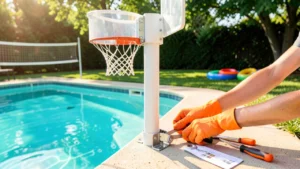
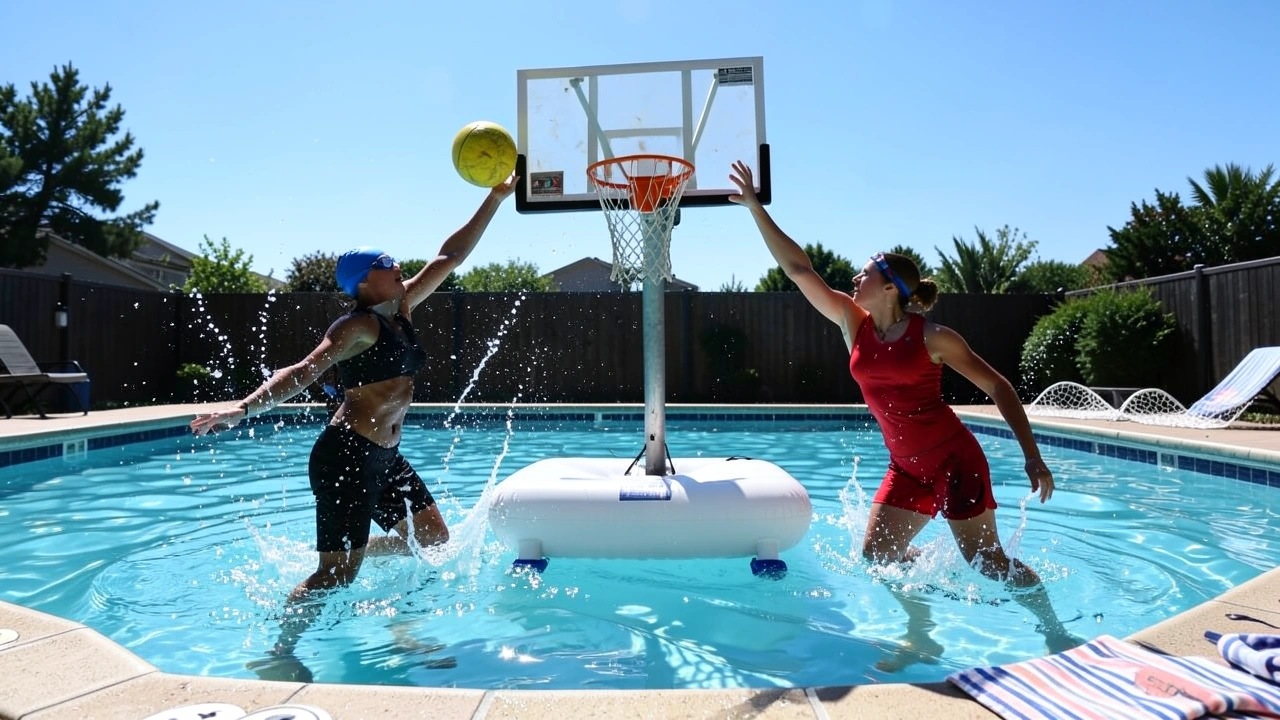
Setting up pool basketball is a quick and straightforward process with the right equipment. The main goal is to safely and securely position the hoop so it’s stable during play but easy to remove after. Always consider the depth of the pool and the material of the deck when choosing a mounting system.
Most modern pool basketball systems are designed for tool-free setup. The two primary methods are using a weighted base or a deck clamp. The choice depends on your pool’s design and how often you plan to play.
| Setup Method | Best For | Steps |
|---|---|---|
| Weighted Deck Base | Concrete, paver, or composite decks. Frequent, stable setup. | 1. Place base near pool edge. 2. Fill base with sand or water. 3. Insert the pole and attach the backboard/rim. |
| Pool Edge Clamp | Thick, flat deck edges (up to 8-12 inches). Easy, temporary setup. | 1. Open the clamp mechanism. 2. Position it over the pool edge. 3. Tighten the screws or knobs until secure. |
| Free-Standing/In-Pool | Deep water areas, decks without edges, or public pools. | 1. Assemble the floating base. 2. Fill with water for weight. 3. Secure the pole and hoop system. |
After setup, always test the hoop’s stability by gently pushing on it before starting play. Ensure it is positioned so players have enough space to swim and shoot without hitting the deck or other obstacles. Proper setup prevents injuries and equipment damage.
Why Is Pool Basketball a Great Exercise?
Pool basketball is an exceptional form of exercise because it leverages the properties of water to create a challenging yet low-impact workout. Water provides natural resistance in all directions, meaning every movement—from swimming to shooting—requires more effort than on land. This builds strength and endurance efficiently.
The cardiovascular benefits are significant. The effort needed to stay afloat and move quickly elevates heart rate, improving heart and lung health. Simultaneously, the cooling effect of water prevents overheating, allowing for longer, more comfortable workout sessions.
- Full-Body Engagement: Legs kick to tread water, core stabilizes the body, and arms handle the ball and swimming.
- Calorie Burning: A vigorous game can burn hundreds of calories per hour, aiding in weight management.
- Joint-Friendly: The buoyancy of water reduces impact stress on joints, making it ideal for those with arthritis or injuries.
- Improved Circulation: Water pressure on the body helps improve blood flow back to the heart.
- Enhanced Flexibility: The range of motion required in water helps increase flexibility and reduce stiffness.
Incorporating pool basketball into a regular routine can complement other land-based exercises. It provides a fun alternative to swimming laps and makes exercise feel less like a chore and more like recreation.
Who Should Play Pool Basketball?
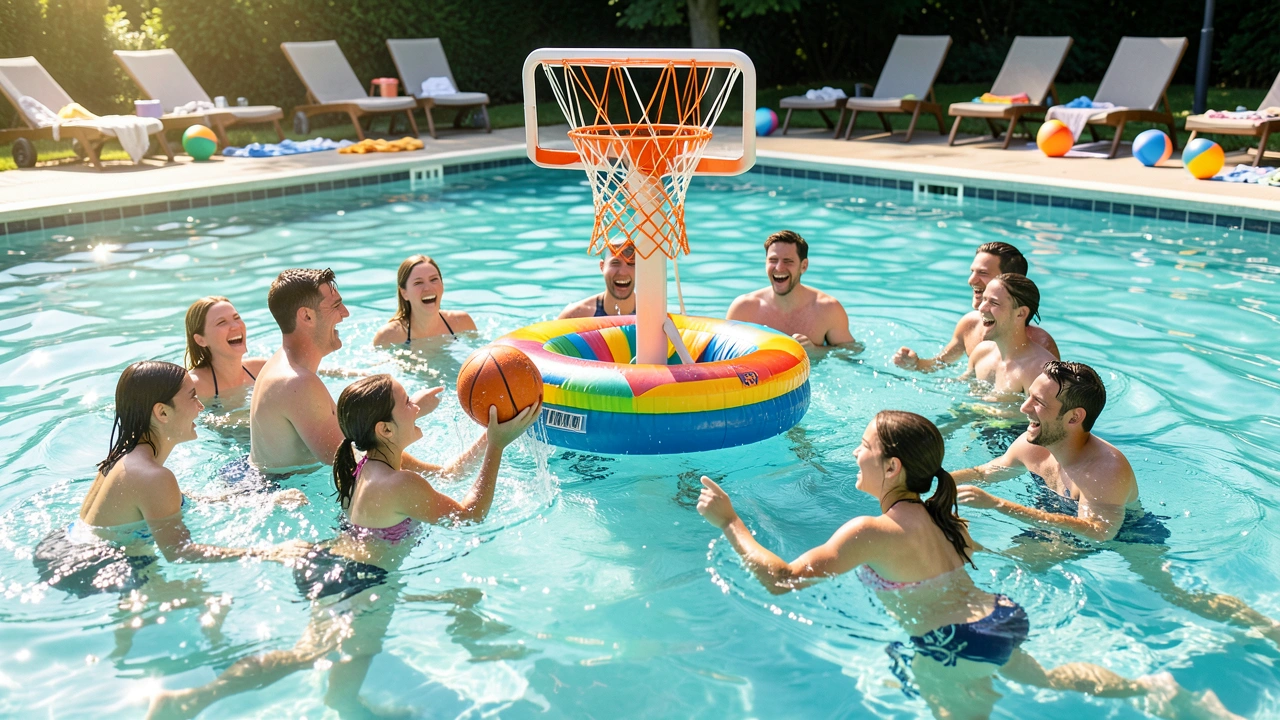
Pool basketball is designed for almost anyone who enjoys water and light activity. Its adaptability makes it perfect for a wide range of participants. From young children to older adults, the game can be scaled to match different fitness levels and abilities.
Families find it to be an excellent way to bond and get active together. It doesn’t require advanced basketball skills, so beginners can jump in and have fun immediately. Competitive players can also enjoy it by establishing more structured rules and tournaments.
- Families and Kids: A safe, engaging way for children to burn energy and learn basic sportsmanship.
- Fitness Enthusiasts: An enjoyable method to cross-train, add variety to workouts, and improve cardiovascular health.
- Rehabilitation Patients: Under professional guidance, the low-impact nature can aid in physical therapy and recovery.
- Social Groups: Perfect for pool parties, community events, and team-building exercises.
- Competitive Leagues: For those seeking organized play, water basketball leagues exist in many regions.
Important: Participants should always be comfortable in the water and aware of their physical limits. Supervision is recommended for young or inexperienced swimmers, even in shallow pools.
The game’s inclusivity is one of its greatest strengths. As long as there is a pool and a willingness to have fun, almost everyone can participate in their own way.
What Are Some Popular Variations of Pool Basketball?
Beyond the standard game, several popular variations of pool basketball keep the activity fresh and exciting. These variations can change the rules, equipment, or team structure to create different experiences. Experimenting with these can cater to different skill levels and group sizes.
The most common variation is simply adjusting the number of players. Smaller pools work well for one-on-one games, while larger pools can accommodate full-team matches. Modifying the scoring system also adds a strategic layer to casual play.
- “Sharks and Minnows” Basketball: A fusion game where “sharks” try to steal the ball from “minnows” trying to shoot, combining elements of tag and basketball.
- Knockout (Lightning): A free-for-all style where players line up and try to score before the person behind them does, creating fast-paced competition.
- Volleyball Hybrid: Using a net stretched across the pool, teams hit a ball back and forth, trying to score by landing it in the opponent’s basketball hoop zone.
- Long-Distance Shooting Contest: A skills competition where players earn points for making shots from various marked distances in the pool.
- Therapeutic Pool Basketball: Adapted for rehabilitation, focusing on gentle movements and range of motion rather than scoring.
These variations ensure that pool basketball never gets boring. You can tailor the game to the mood, the participants, and the specific occasion, whether it’s a rigorous workout or a lighthearted party game.
Frequently Asked Questions
What is the official name for pool basketball?
The sport is most officially recognized as water basketball by international governing bodies. However, pool basketball is the widely accepted common term for casual and recreational play. Both names are correct and understood globally.
Do you need to know basketball to play pool basketball?
No, prior basketball experience is not required. The simplified rules and the unique dynamics of playing in water mean that anyone can learn quickly. The emphasis is on fun and activity rather than technical skill, making it very beginner-friendly.
What kind of ball is used for pool basketball?
A water-resistant ball made of vinyl or rubber is used. It is lighter than a standard basketball and designed to float or be easily retrieved from the water. Using a regular basketball is not recommended as it can become waterlogged and heavy.
Is pool basketball a good workout?
Yes, it’s an excellent full-body workout. The water resistance makes every movement more challenging, which helps build strength and endurance. It also elevates your heart rate for cardiovascular benefits while being gentle on your joints due to water’s buoyancy.
Can pool basketball be played in shallow water?
Absolutely. The game can be adapted for any depth. In shallow water, players can stand and jump, which changes the dynamics to be more similar to land-based basketball.
The key is to have a hoop positioned at an appropriate height for the water level.
Final Thoughts
Pool basketball, known interchangeably as water basketball or aqua basketball, is a versatile and enjoyable aquatic activity. It offers a unique blend of fun, social interaction, and significant health benefits through low-impact, high-resistance exercise. The right equipment and a clear set of house rules are all you need to get started.
Its adaptability allows it to be enjoyed by people of nearly all ages and fitness levels, making it a timeless addition to any pool party or recreational program. So grab a ball, set up a hoop, and dive into a game that’s as refreshing as it is entertaining.

As the founder of RayaVila, Raya Quinn is passionate about helping consumers cut through the noise of online shopping. Through thorough research and unbiased recommendations, she creates content that makes buying decisions easier and more informed.